

Cohort 2 Embarks on Their PhD Research Journey
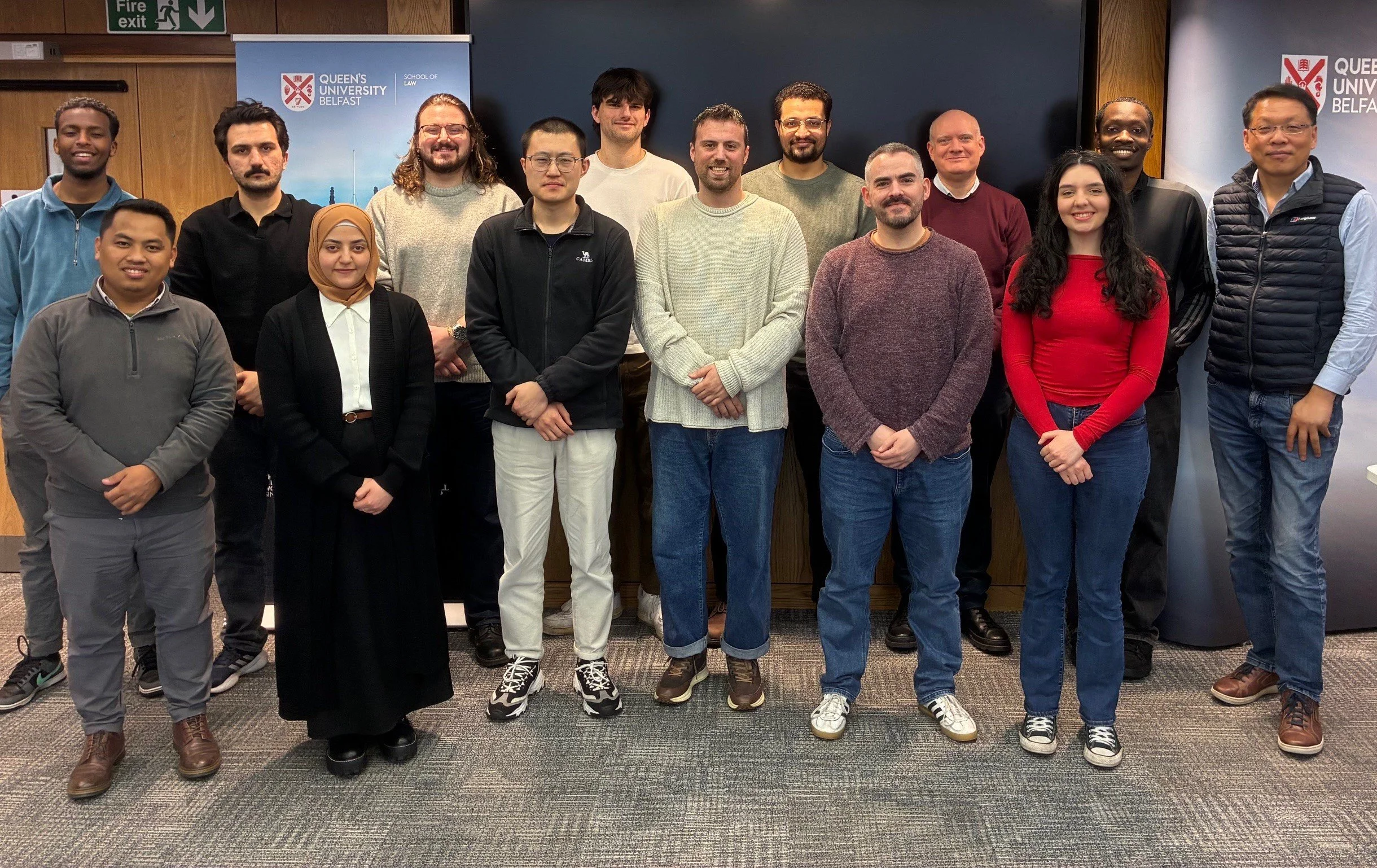
Following the successful completion of the taught phase of the programme, Cohort 2 has now transitioned into the research phase of their doctoral studies.
The cohort, comprising 13 researchers across Queen's University Belfast and the University of Surrey, has begun work on a portfolio of ambitious PhD projects that address some of the most pressing challenges facing future digital and communications infrastructure.
Building on a strong foundation of multidisciplinary training, the students are now working closely with their supervisory teams to develop novel solutions in areas including trustworthy and agentic AI, post-quantum security, resilient satellite communications, digital identity, autonomous systems, and next-generation 5G/6G networks. As the cohort moves forward, their research will contribute to advancing secure, trustworthy, and resilient technologies that underpin future telecommunications, cyber-physical systems, and digital services.
Research Breadth Across the Cohort
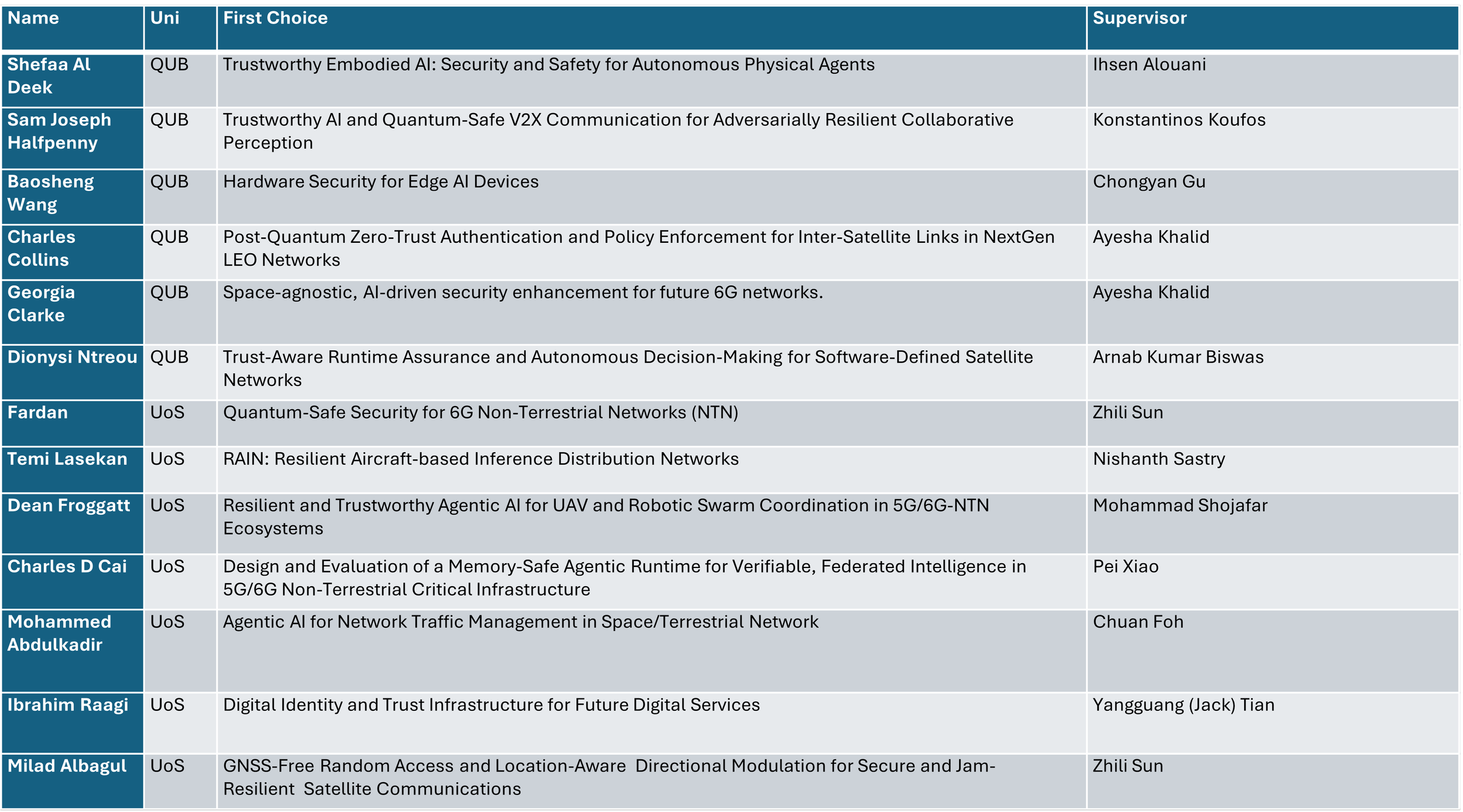
The breadth of research being undertaken by Cohort 2 reflects the highly interdisciplinary nature of the programme. Projects span trustworthy embodied AI for autonomous agents, hardware security for edge AI devices, quantum-safe communications, zero-trust architectures for satellite networks, AI-driven security for future 6G systems, and trust-aware autonomous decision-making.
Other students are exploring resilient aircraft-based networking, agentic AI for robotic swarms and traffic management, memory-safe platforms for federated intelligence, digital identity and trust infrastructures, and innovative approaches to secure and jam-resistant satellite communications.
Collectively, the cohort's research addresses challenges across cyber security, artificial intelligence, telecommunications, space and non-terrestrial networks, autonomy, and critical digital infrastructure, demonstrating the programme's commitment to shaping the future of secure and resilient connected systems.